
Veterinary Blog
How to Choose Safe Toys for Your Dog This Holiday Season
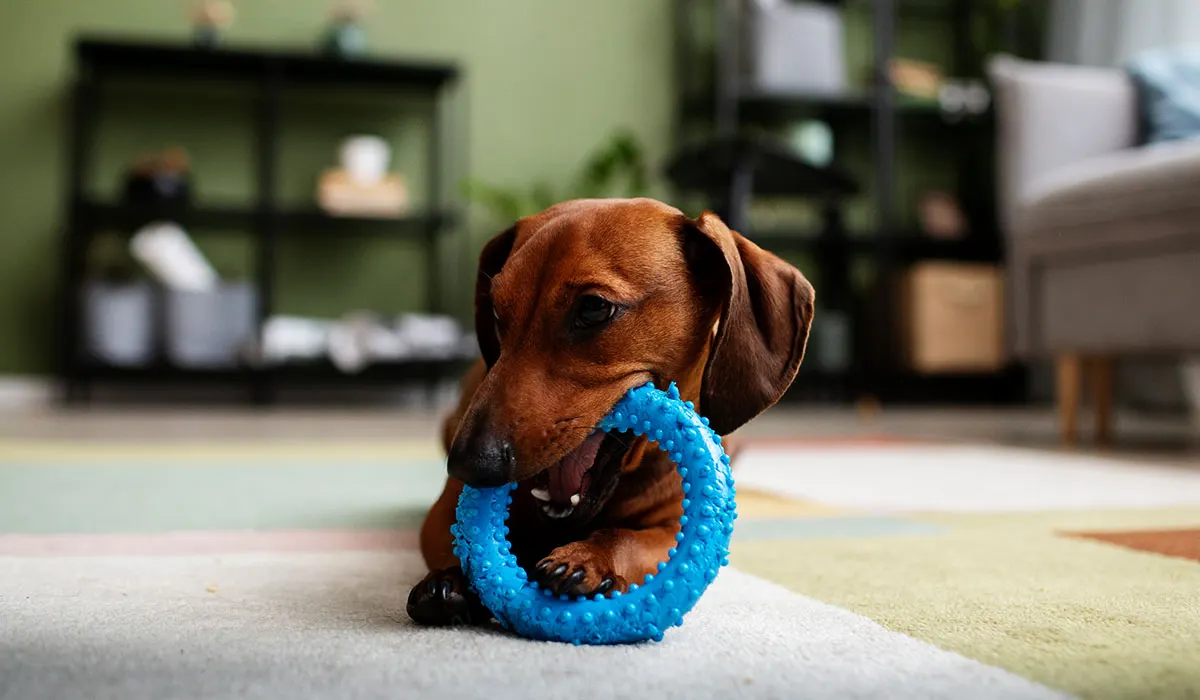
For many dogs, unwrapping a new toy is one of the little joys of the holiday season. Whether you are shopping for a playful puppy or a longtime companion, it is tempting to pick the cutest toy on the shelf. But the best choice is one that suits how your dog actually plays.
With cooler, rainier days arriving in Chilliwack and the Fraser Valley, toys can also help make indoor time more interesting. Before adding something new to your dog’s collection, here is what to consider so playtime stays engaging and safer.
December’s Safe Toys and Gifts Month is a reminder to think carefully about the gifts we choose. Although this observance began as a general toy-safety campaign in the United States, it offers a useful prompt for dog owners to check whether a toy is appropriate for their own pet.
Start With Your Dog’s Size and Play Style
Not every dog uses a toy the same way. Some gently carry a plush animal around the house, while others spend minutes trying to pull the stuffing out. A toy that works well for one dog may be a poor choice for another.
Check the manufacturer’s size guidance and choose a toy that cannot easily fit entirely into your dog’s mouth. Think about how your dog has treated similar toys in the past, not just their breed or weight. The American Animal Hospital Association (AAHA) recommends considering chewing style, size, hardness and durability when selecting a chew toy.
Take a Closer Look at Materials and Construction
Before buying, give the toy a quick inspection. Look for sturdy seams, securely attached parts and surfaces without sharp or rough edges. Loose eyes, bells, ribbons or easily detached decorations are reasons to choose something simpler.
Flexible rubber toys may suit some dogs who enjoy chewing, while soft toys may be better for supervised games with gentler players. Extremely hard chews can damage teeth. If a chew feels rock-hard or does not give at all, ask your veterinarian about gentler alternatives.
The ASPCA also advises selecting chews for the individual dog’s species, size and chewing habits, and supervising their use.
Match the Toy to the Kind of Fun Your Dog Enjoys
The most useful toy is not always another ball or squeaker. Different kinds of play can keep your dog interested, particularly when wet weather changes your usual outdoor routine.
- Food puzzles: Offer a little problem-solving at mealtime; start with an easy design and supervise use.
- Fetch toys: Choose an appropriate size and use them for interactive play instead of leaving them out for chewing.
- Soft toys: Try gentle carrying or supervised games if your dog does not pull them apart.
- Flexible chew toys: Consider options sized for your dog’s mouth and suited to their chewing strength.
Rotate a few favourites instead of leaving every toy out all the time. New activities do not need to be complicated to add variety to the day.
Make a Quick Toy Check Part of Your Routine
Even a well-chosen toy can wear down with repeated play. Take a moment to look it over before handing it back to your dog, especially after an energetic game.
- Retire toys with cracks, tears or exposed stuffing.
- Remove toys with loose pieces or damaged squeakers.
- Wash toys as directed by the manufacturer and let them dry thoroughly.
- Reassess the size as puppies grow and their play style changes.
When a toy begins to come apart, replacing it is a better choice than trying to make it last one more week.
Supervise New Toys and Know When to Call
Offer a new toy while you can watch how your dog interacts with it. If they immediately tear off pieces, swallow material or become overly possessive or distressed, put it away and choose a different type of activity.
If you think your dog swallowed part of a toy, contact a veterinarian promptly rather than waiting for symptoms. Vomiting, a reduced appetite, abdominal discomfort or unusual tiredness may also warrant veterinary assessment. Difficulty breathing or collapse requires immediate emergency attention. Do not induce vomiting unless a veterinarian instructs you to do so.
Vedder Mountain Veterinary Clinic provides emergency and urgent care during our regular business hours: Monday to Friday, 8:30 AM to 5:30 PM, and Saturday, 8:30 AM to 3:00 PM. We are closed on Sundays and statutory holidays. If your dog needs urgent care during these hours, please call ahead so our team can prepare for your arrival. For emergencies outside our business hours, seek care at an appropriate emergency veterinary hospital. You can confirm our current hours on our contact page.
Ask About the Best Play Options for Your Dog
Toys should support your dog’s comfort and enjoyment, not cause pain. If you have noticed broken teeth, mouth sensitivity or repeated destruction of chews, bring those concerns to your next wellness and preventative care appointment. Our team can consider your dog’s age, health and habits when discussing suitable play options.
For families around Chilliwack and Sardis, a little attention to toy selection can make rainy-day enrichment easier to enjoy.
Keep the Holidays Playful and Comfortable
The best gift for your dog does not have to be the biggest or most expensive toy. Choose something that suits their size and style, introduce it with supervision and check its condition regularly. Those small habits help make playtime more enjoyable throughout the season.
Concerned about your dog’s chewing habits, teeth or which toys may be appropriate? Contact Vedder Mountain Veterinary Clinic to request an appointment. Our team can help you make informed choices for your dog’s comfort and well-being.